
Understanding Hair Shaft Disorders
November 17, 2026
Causes, symptoms and how to care for fragile hair.
Healthy hair goes beyond length, volume and appearance. The structural integrity of each hair strand plays an important role in its overall health. When this structure is compromised, it can lead to a group of conditions known as hair shaft disorders.
What Are Hair Shaft Disorders?
Hair shaft disorders are abnormalities that affect the structure, shape or strength of individual hair strands. These conditions can make hair fragile, brittle, difficult to manage and prone to breakage.
While some hair shaft disorders are inherited, others develop over time due to damaging hair care practices or environmental exposure.
Types of Hair Shaft Disorders
1. Trichorrhexis Nodosa
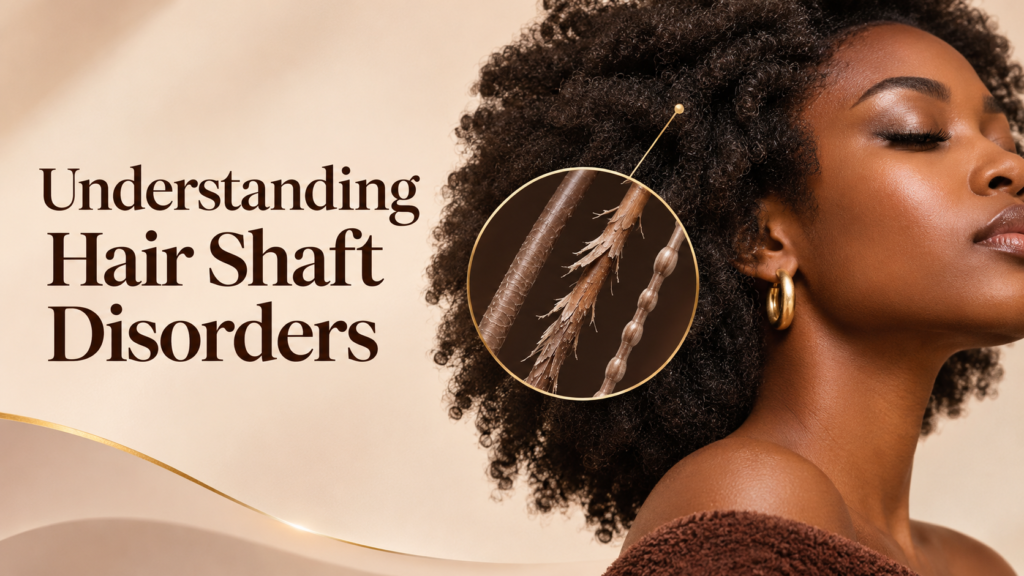
One of the most common hair shaft abnormalities, characterised by weak points along the hair strand that make it break easily.
2. Monilethrix
An inherited condition in which hair strands have a bead-like appearance, with narrow sections that are particularly susceptible to breakage.
3. Pili Torti
A condition in which the hair shaft becomes flattened and twisted along its axis.
4. Bubble Hair
A hair shaft abnormality caused by excessive heat exposure, resulting in the formation of tiny air-filled cavities within the hair strand.
5. Trichoptilosis
Commonly known as split ends, this occurs when the hair shaft splits longitudinally, usually towards the ends.
What Causes Hair Shaft Disorders?
Several factors can contribute to hair shaft abnormalities, including:
- Genetic predisposition
- Excessive heat styling
- Frequent chemical treatments
- Aggressive brushing and combing
- Repeated friction and mechanical damage
- Certain underlying medical conditions
Signs and Symptoms
- Excessive hair breakage
- Dry, brittle and fragile strands
- Changes in hair texture
- Difficulty retaining hair length
- Frequent split ends
- Irregularities along the hair strand
How to Protect and Manage Your Hair
Although not all hair shaft disorders can be prevented or cured, adopting healthier hair care practices can help minimise damage and improve manageability.
- Limit the use of heat styling tools.
- Use moisturising shampoos and conditioners.
- Detangle your hair gently.
- Avoid excessive chemical processing.
- Choose low-tension hairstyles.
- Protect your hair from unnecessary friction.
- Maintain a balanced, nutritious diet.
Persistent or unexplained hair breakage should be assessed by a dermatologist to identify its underlying cause and determine the appropriate treatment.
Understanding your hair is the first step towards caring for it effectively. Recognising the signs of hair shaft disorders early can help prevent unnecessary damage and support better hair health.
Remember, healthy hair is not just about growth — it is also about strength, protection and length retention.