
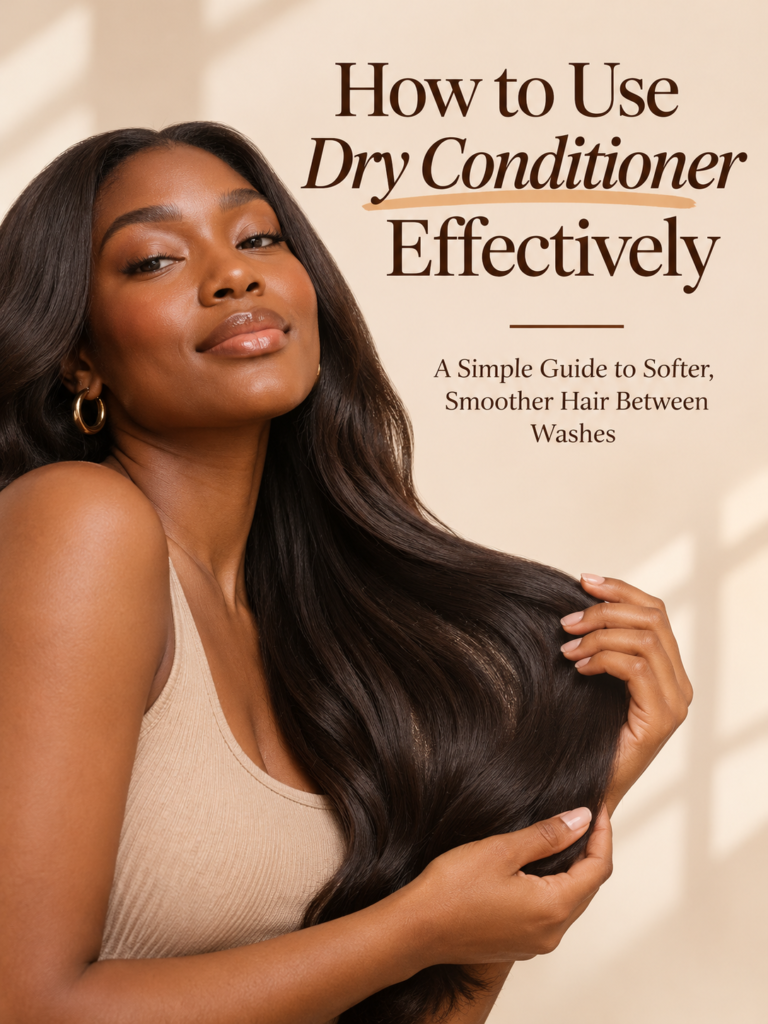
How to Use Dry Conditioner Effectively
November 13, 2026
The Secret to Softer, Smoother, and More Manageable Hair Between Washes
Keeping your hair soft, shiny, and manageable doesn’t always require a full wash-day routine. Sometimes, your hair just needs a little refresh, and that’s where dry conditioner comes in.
Whether you’re dealing with frizz, dullness, dryness, or tangled ends, dry conditioner can help bring your hairstyle back to life in minutes.
But are you using it correctly? In this guide, we’ll explore what dry conditioner is, its benefits, and the best ways to incorporate it into your hair care routine.
What Is Dry Conditioner?
Dry conditioner is a lightweight hair care product designed to soften, smooth, and refresh hair without requiring water or rinsing.
Unlike traditional conditioners that are usually applied after shampooing, dry conditioners are typically used on dry hair. They often come in spray form, making them convenient for quick touch-ups.
Dry Conditioner vs. Dry Shampoo
Although they sound similar, these products serve different purposes.
- Dry shampoo helps absorb excess oil around the roots, making hair look less greasy.
- Dry conditioner focuses on the mid-lengths and ends, helping reduce frizz, improve softness, and add shine.
Both products can complement each other, especially when refreshing your hairstyle between wash days.
Benefits of Using Dry Conditioner
Adding dry conditioner to your hair care routine can offer several benefits.
1. Helps control frizz
Dry conditioner can smooth unruly strands, reduce flyaways, and give your hairstyle a neater appearance.
2. Adds softness and shine
When your hair starts looking dull or feeling rough, a little dry conditioner can improve its appearance and texture.
3. Makes hair easier to manage
Some formulas help reduce tangles and make brushing or styling easier.
4. Refreshes hairstyles between washes
Dry conditioner is useful when your hair needs a quick refresh but you don’t want to wash and restyle it.
5. Saves styling time
With the right application, you can refresh your hair in minutes without starting your routine from scratch.
How to Use Dry Conditioner Effectively: Step-by-Step
Step 1: Start With Dry Hair
Most dry conditioners are specifically formulated for use on dry hair. Make sure your hair is dry before applying, unless your product instructions say otherwise.
If your hair has knots or tangles, gently separate them with your fingers or an appropriate comb.
Step 2: Shake the Product Well
If you’re using an aerosol dry conditioner, shake the can according to the manufacturer’s instructions. This helps prepare the formula for even application.
Step 3: Apply From the Mid-Lengths to the Ends
Hold the spray approximately 6–8 inches away from your hair, or follow the distance recommended on the packaging.
Spray lightly along the mid-lengths and ends, concentrating on areas that feel dry or look frizzy.
Pro tip: Avoid spraying directly onto your scalp or roots unless the product is specifically designed for those areas. Too much conditioner near the roots can leave your hair looking greasy or weighed down.
Step 4: Distribute the Product Evenly
After spraying, gently work the product through your hair with your fingers or a suitable brush or comb.
For curly or textured hair, finger-detangling may help preserve curl definition and minimize unnecessary disruption.
Step 5: Style as Desired
Once the product is evenly distributed, style your hair as usual.
You can use dry conditioner to refresh straight hairstyles, smooth ponytails, soften dry ends, or tame flyaways.
If you plan to use heated styling tools, remember that dry conditioner is not automatically a heat protectant. Check whether your particular product offers heat protection.
Common Mistakes to Avoid
Even the best hair care products can give disappointing results when used incorrectly.
Using too much product: Start with a light application and add more only when necessary. Excess product can make hair feel heavy or coated.
Applying directly to the scalp: Dry conditioner is generally intended for the lengths and ends, not the roots.
Ignoring your hair type: Fine hair may need a lighter formula, while thick, coarse, or very dry hair may benefit from a richer conditioning product.
Using it as a replacement for regular conditioning: Dry conditioner provides a convenient refresh, but it doesn’t replace washing, rinse-out conditioners, or deeper conditioning treatments when needed.
Can You Use Dry Conditioner on Wigs and Hair Extensions?
Some dry conditioners may be suitable for human-hair wigs and extensions, depending on their formulation and the manufacturer’s care instructions.
Before applying, check that the product is compatible with the hair material. Avoid heavy applications near wig caps, extension bonds, or attachment points.
Synthetic wigs may require products specifically formulated for synthetic fibres.
How Often Should You Use Dry Conditioner?
There’s no single schedule that works for everyone.
You can use dry conditioner when your hair needs extra softness, shine, or frizz control between wash days.
The ideal frequency depends on your hair texture, the product’s formulation, and how much buildup develops over time.
If your hair begins to feel coated or heavy, reduce the amount you use and cleanse it as appropriate.
Dry conditioner is a convenient addition to your hair care routine, especially when you want to maintain a smooth, fresh-looking hairstyle without washing your hair every day.
The secret to getting the best results is simple: choose the right formula, apply it sparingly, focus on the mid-lengths and ends, and distribute it evenly.
With the right technique, dry conditioner can help keep your hair looking softer, shinier, and more manageable between washes.
Beautiful hair starts with the right care. Give your strands the attention they deserve!