
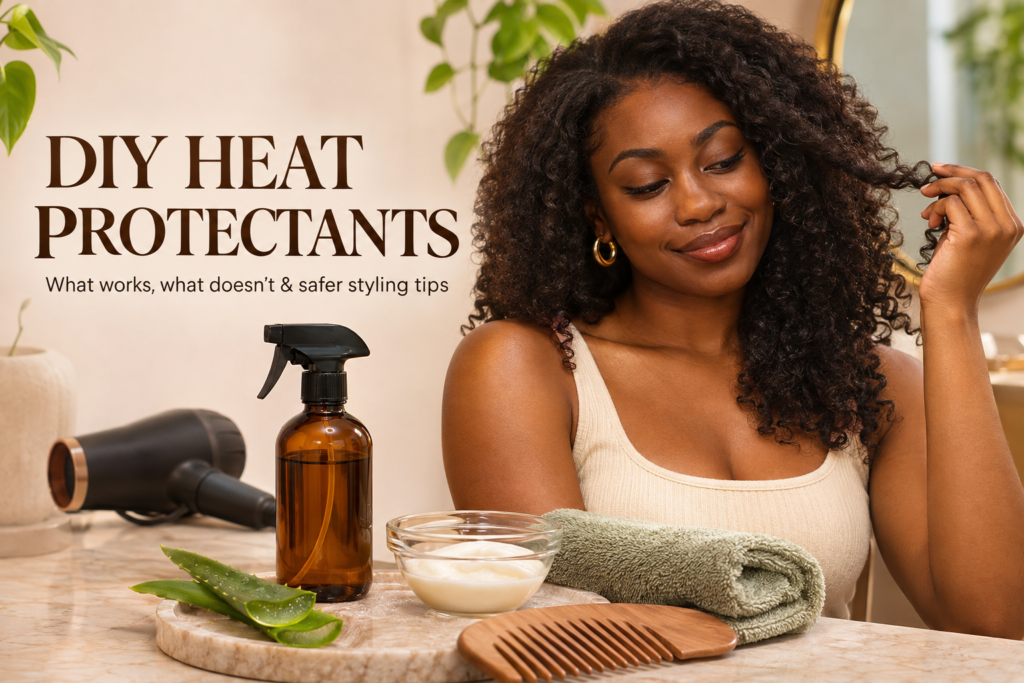
DIY Heat Protectants: Natural Hair-Care Tips for Healthier Heat Styling
November 10, 2026
Love your sleek silk presses, bouncy curls, or perfectly blow-dried hair? We get it! Heat styling can transform your look in minutes. But frequent exposure to high temperatures can leave your hair dry, brittle, frizzy, and prone to breakage.
The good news? You can add simple, affordable DIY treatments to your hair-care routine to keep your strands moisturized and easier to manage.
But here’s something important: Not every natural ingredient that moisturizes your hair can protect it from heat damage. Let’s explore what homemade treatments can do, what they can’t, and how to style your hair more safely.
Why Does Your Hair Need Heat Protection?
Blow-dryers, straighteners, curling wands, and hot combs expose your hair to temperatures that can damage its protective outer layer, known as the cuticle.
Without proper care, repeated heat styling can cause:
- Dryness and moisture loss
- Split ends and breakage
- Frizz and rough texture
- Reduced elasticity
- Changes to your natural curl pattern
A good heat protectant is formulated to reduce some of this damage. Certain commercial products contain film-forming ingredients that help protect hair fibres during styling.
Homemade conditioning treatments can support healthier-looking hair, but they aren’t proven substitutes for these products.
3 DIY Hair Treatments to Try at Home
1. Aloe Vera Hydrating Mist
Aloe vera is a popular ingredient in natural hair care. It can help hair feel moisturized and manageable, making it a useful addition to your pre-styling routine.
What you’ll need:
- 1 teaspoon of plain, cosmetic-grade aloe vera gel
- 2 tablespoons of clean water
- A small, clean bowl
How to prepare:
- Combine the aloe vera gel and water.
- Stir until evenly mixed.
- Apply a small amount to damp hair.
- Gently detangle and allow your hair to dry.
Best for: Adding light moisture before air-drying or heatless styling.
Important: This mixture is not a tested heat protectant. Prepare only what you need and discard leftovers. Never apply a straightener to wet or damp hair.
2. Coconut Oil Pre-Wash Treatment
Coconut oil is a popular option for dry hair because it helps condition strands and improve their feel.
What you’ll need:
- ½–1 teaspoon of coconut oil, depending on your hair length and thickness
How to use:
- Rub a small amount of coconut oil between your palms.
- Distribute it through your hair’s mid-lengths and ends.
- Leave it on for approximately 20–30 minutes.
- Shampoo thoroughly and follow with conditioner.
Best for: A conditioning treatment before your regular wash routine.
Remember: Coconut oil should not be treated as a replacement for heat-protection spray. An oil’s high smoke point does not prove that it protects hair from styling damage.
3. Shea Butter Moisture-Sealing Treatment
Shea butter is especially popular in routines for thick, curly, and coily hair because it helps soften and condition dry strands.
What you’ll need:
- A pea-sized amount of plain shea butter
How to use:
- Warm the shea butter between your palms until it softens.
- Apply sparingly to dry ends.
- Distribute gently to avoid buildup.
- Style using heatless methods such as twists, braids, or rollers.
Best for: Softening dry ends and finishing heatless hairstyles.
Pro tip: Less is more! Too much shea butter can weigh down your hair. Avoid applying heavy butter immediately before using a flat iron.
Can DIY Ingredients Replace a Heat Protectant?
Not reliably.
Natural ingredients like aloe vera, coconut oil, and shea butter can offer conditioning benefits, but there isn’t sufficient evidence that ordinary homemade mixtures provide dependable protection against high-temperature styling tools.
For blow-drying, silk presses, or flat ironing, choose a properly formulated heat protectant and follow its instructions.
Look for products specifically labelled for heat protection. Some use silicones, conditioning polymers, or other ingredients designed to help reduce thermal damage.
Extra Tips to Prevent Heat Damage
Whether your hair is natural, relaxed, coloured, or covered by a wig, good styling habits make a difference.
1. Use lower temperatures. Start with the lowest effective heat setting instead of automatically reaching for the highest.
2. Never flat-iron wet hair. Let your hair dry completely before using straighteners or curling irons.
3. Always use a suitable heat protectant. Choose one designed for your styling tool and apply it according to the label.
4. Reduce repeated passes. Repeatedly running a straightener over the same section increases heat exposure.
5. Deep-condition regularly. Well-conditioned hair is easier to detangle and may experience less mechanical breakage.
6. Embrace heatless hairstyles. Twist-outs, braid-outs, rollers, and protective styles can help you achieve gorgeous looks without frequent heat styling.
Beautiful hair doesn’t have to come at the expense of healthy hair.
DIY treatments are a budget-friendly way to add softness, moisture, and care to your routine. Aloe vera, coconut oil, and shea butter can all have their place in a thoughtful hair-care regimen.
Just remember that moisturizing your hair and protecting it from high temperatures are two different things.
Pair your favourite natural treatments with a reliable heat protectant, sensible styling temperatures, and regular conditioning.
Your hair deserves the best of both worlds: beautiful styling and long-term care.
Healthy hair is always in style!